Heat pump repair in Greenville
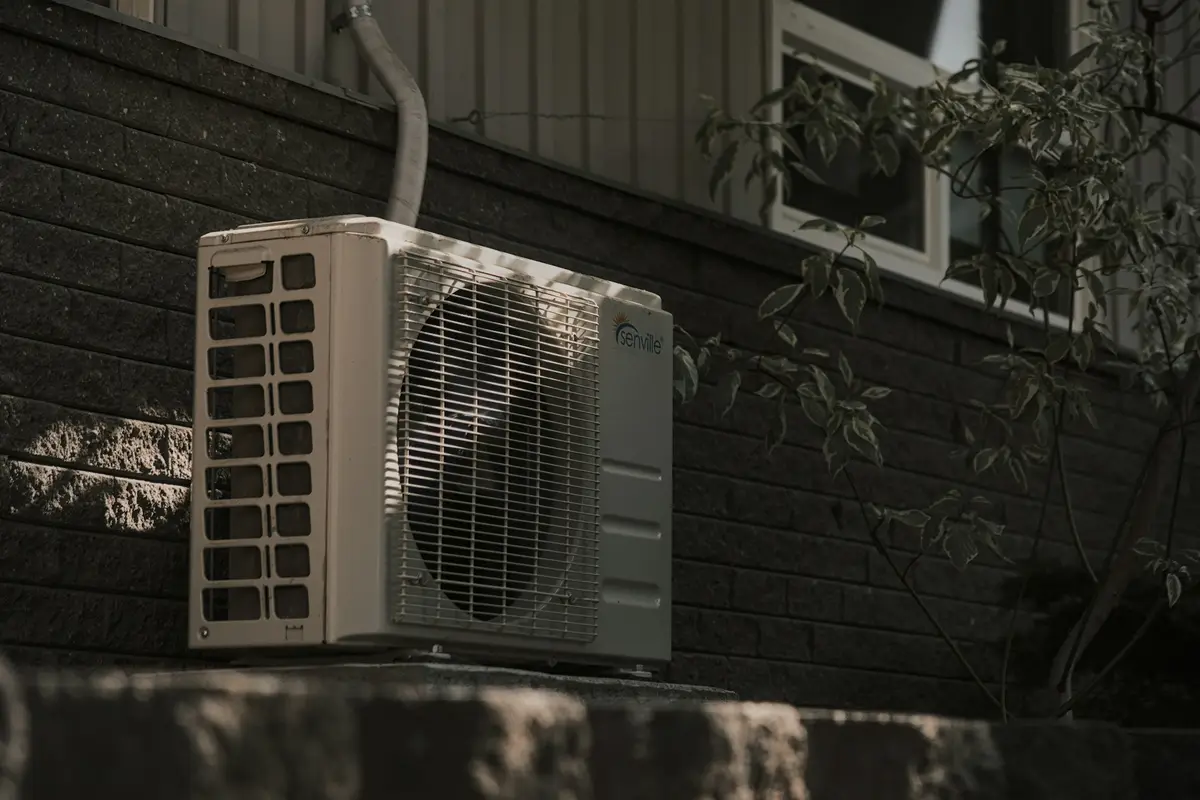
In Greenville the outdoor unit is usually a heat pump: it cools in summer and runs in reverse to heat in winter. About 84% of occupied homes in the city heat with electricity (Census ACS 2020-2024). That means one machine does about ten months of work a year, and when it fails you can lose both cooling and heat.
Summer failures
In cooling mode a heat pump fails the same way an air conditioner does: a weak capacitor, a stuck contactor, a fan motor, a refrigerant leak or a clogged condensate drain. Common AC failures and what they cost.
Winter failures
- Cool air in heat mode that never warms up. A stuck reversing valve, the part that switches the unit between heating and cooling, is one cause. A thermostat set up for the wrong system type is another, and cheaper.
- An outdoor unit caked in ice. A thin frost in cold, damp weather is normal, and the unit melts it off in a defrost cycle that can make it hiss and steam for a few minutes. A thick block of ice that stays means the defrost control, a sensor or the refrigerant charge needs a look.
- A huge January bill. If the backup heat strips are doing all the work, the heat pump itself may have stopped heating. "Aux heat" or "emergency heat" lit on the thermostat all day is the clue.
Nights per year at or below freezing (32°F)
Emergency heat, briefly
Most heat pumps here have electric resistance heat strips in the air handler. They come on automatically as "auxiliary" heat on the coldest mornings and during defrost. "Emergency heat" is the setting that runs the strips alone. Use it only if the outdoor unit has failed, and call for service, because strips cost more to run than the heat pump. Freezing nights are getting rarer at the Greenville station: 54.4 a year over 1991-2020, 45.9 over 2016-2025. Those are still the nights the strips run most.
What it costs
Repair prices are close to the AC figures: Fixr's 2026 range for most repairs is $250 to $700, and a compressor runs $600 to $3,000. A full heat pump installation is $5,000 to $15,000, with an $8,350 national average, according to Fixr. Split-system heat pumps installed since 2023 must meet 14.3 SEER2 and 7.5 HSPF2. Repair or replace.
Gas homes
If your home heats with gas, a heat pump can still replace the air conditioner and handle most of the winter, with the furnace kept as backup. That is a dual-fuel setup. Whether it pays off depends on your gas and electric rates; ask the contractor to show the math. Greenville Utilities Commission supplies both gas and electricity in parts of its service area and offers free advice on equipment sizing (call 252-551-1521).
Questions Greenville homeowners ask
Why is my heat pump blowing cold air in heat mode?
During a defrost cycle the indoor air can feel cool for a few minutes, which is normal. If it stays cool, the reversing valve, the defrost control or the thermostat setup may be the cause. Check that the thermostat is set to heat, then call.
Should I use emergency heat?
Only if the outdoor unit has failed. Emergency heat runs the electric heat strips alone, which costs more to run. Call for service rather than leaving it on for days.
How long does a heat pump last in eastern North Carolina?
This Old House puts a typical home cooling system at 12 to 15 years. A heat pump runs in both seasons, so it collects hours faster than an air conditioner of the same age.
Sources
- Fixr: How Much Does a Heat Pump Cost in 2026? (updated January 22, 2026)
- Fixr: AC Repair Cost in 2026 (updated January 29, 2026)
- US DOE: 2023 Central Air Conditioner and Heat Pump Standards FAQ (October 5, 2022)
- Greenville Utilities Commission: Energy Services, free energy audits (accessed October 29, 2026)
- NOAA NCEI daily summaries, Greenville, NC cooperative station (USC00313638)
- US Census Bureau, American Community Survey 2020-2024 5-year estimates, via Census Reporter